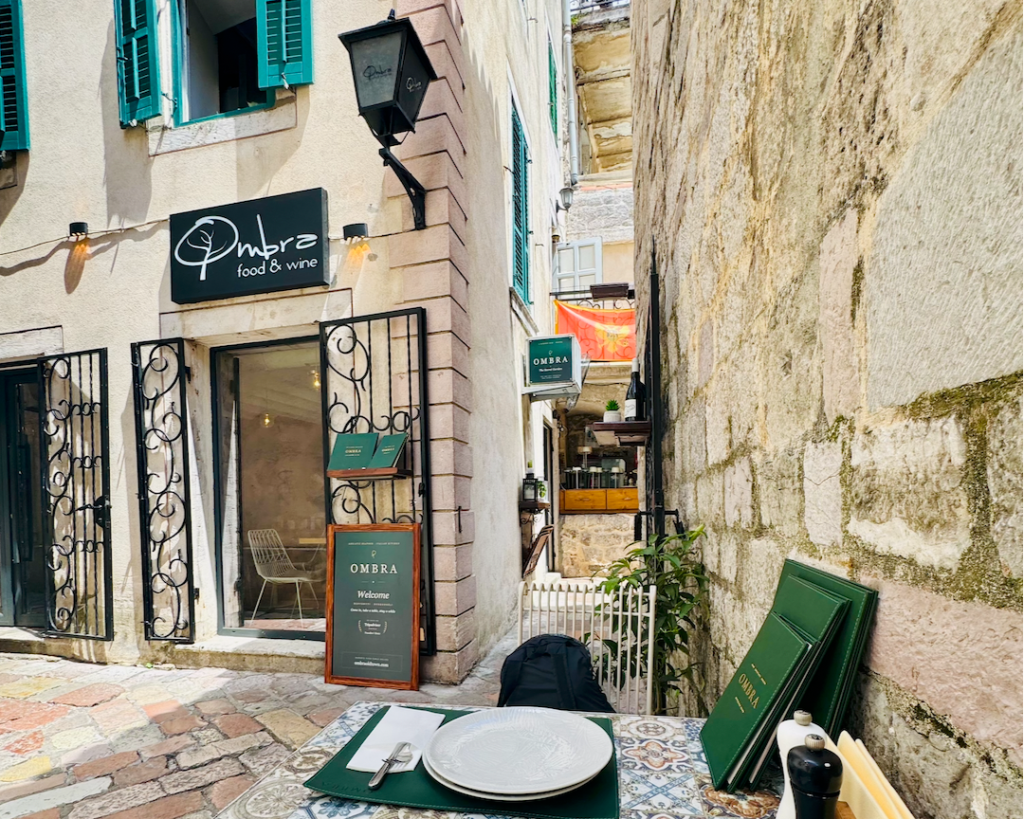
I had lunch at Ombra today.
The day before, I’d noticed a woman there — the matriarch of the restaurant, perhaps — in a colourful summer dress. She invited me in; I told her I’d probably come back the next day, and I did.
Yesterday she was warm. Today she was not. I felt like a nuisance. I felt invisible. Of everyone in the room, she was the least hospitable, and I felt judged.
Or maybe I judged her badly. Maybe she was simply having a bad day.
Later, I joined a tour to Perast and Our Lady of the Rocks. Before we set off, the tour operator asked the other groups whether they’d be fine skipping the Blue Cave, since it wasn’t safe to visit that day. He never asked me. Perhaps my voice didn’t register. I had paid, so I would go regardless — my consent, it seemed, was assumed rather than sought.
Then we were on the boat. A family of five sat at the front of the speedboat. At the back, there were four of us — three travellers from India, and me. When we reached the island of Tivat, the father turned to the Indian family and asked if they’d like to move up front. They said they were fine where they were. My opinion was never solicited.
These moments — along with an earlier one at a hotel, where the waiters simply didn’t attend to me when I arrived — set me thinking about invisibility: how people, intentionally or not, render others unseen. A few reflections on how this happens.
The Relative Low Value
People become invisible when they’re perceived to hold little value to the one looking at them. The woman in the colourful dress may have dismissed me as someone of modest means — Asian, unlikely to order much, not the customer she wanted. In revenue terms, I didn’t register. When cruise ship passengers arrive in throngs, a table for two or four occupied by someone like me can look like wasted space. This isn’t only her failing — many of us do the same. Someone walks in, we size them up by how they look and dress, and we look away. We reserve our attention for those we deem worth it.
The Lone Voice
Lone voices carry less weight. People travelling alone are taken less seriously — they could shout at the top of their lungs and still not be disruptive enough to matter. Their opinion counts for little against the voice of a dozen others. I’ve lost count of the times service staff have listened patiently to my complaint and then done nothing about it anyway. I am one person, an isolated case, and my displeasure won’t cost them much. The father on the boat was doing his own quiet arithmetic: if the Indian family declined and I accepted, nothing would change. My choice didn’t move the outcome, so it didn’t need to be asked.
Invisibility as a Function of Power
Invisibility, I’ve come to think, is really a question of power. People become visible in proportion to the power they hold. It’s why a single activist — or even a dozen — is often ignored, while a crowd cannot be. This is the tyranny of numbers: one powerless voice changes nothing, but a multitude of them can shift the ground beneath our feet. And the single voice of a dictator, of course, can alter the course of history entirely.
Power draws from several sources. Affluence is one — money buys not just comfort but influence, and sometimes even the appearance of happiness. Education is another, at least to a point. At Perast, I heard someone announce, “I am a lawyer,” loudly enough for everyone nearby to hear. A declaration like that instantly sets a person apart — though it doesn’t necessarily make them powerful.
But power must first be recognised before it can take effect. Wealth means little unless others acknowledge it, and because it depends on perceived value, it creates its own hierarchy — some are simply deemed worth more than others. Education, too, is contextual: a doctor may outrank a lawyer in the middle of a pandemic, and lose that advantage once it ends. The more sources of power a person holds, the more powerful they become. A wealthy doctor outranks a poor lawyer, all else being equal.
And here lies the quiet tragedy: very few people hold an abundance of these sources, and those who do tend to use them all, compounding their advantage further. The rest of us simply have to make peace with wherever we’ve landed.
Caste may have been formally abolished in modern society, but hierarchy hasn’t gone anywhere — it has simply been rebuilt from other materials: money, credentials, connections, charm.
These hierarchies quietly shape who we can marry, where we’re allowed to live, how far we can rise. They decide which circles will open to us, which rooms we’ll be let into. They even shape how freely we’re allowed to laugh.
Laughing loudly in public is not a right extended equally to everyone. The powerless are expected to stay unseen, visible only when the powerful permits it. Speaking loudly is a privilege of the few; everyone else is expected to lower their voice.
This is why the powerless instinctively seek each other out — because a single voice is easy to overlook, but a chorus is harder to ignore. And even then, a chorus can be silenced. Whether a voice is heard often depends less on its volume than on the willingness of the powerful to make room for it.
None of this is to say power is inherently a zero-sum game, or that it is inherently good or bad. Like most things, it should be judged by what it’s used for, not by its mere existence. One person’s gain in power doesn’t automatically mean another’s loss.
But because power is relational — held within us, exercised over others, shared with others, directed toward others — it only becomes real when the people around us choose to recognise it.
The woman in the colourful dress had a choice. So did the father on the boat, and so did the waiters at the hotel. Each of them could have chosen to acknowledge that I was there. Doing so would have cost them nothing — no loss of standing, no diminishment of their own position. And in choosing it, they might have offered someone like me a small but real gift: recognition, a flicker of joy, a reminder that I, too, am worth seeing.
A Parallel in Development Practice
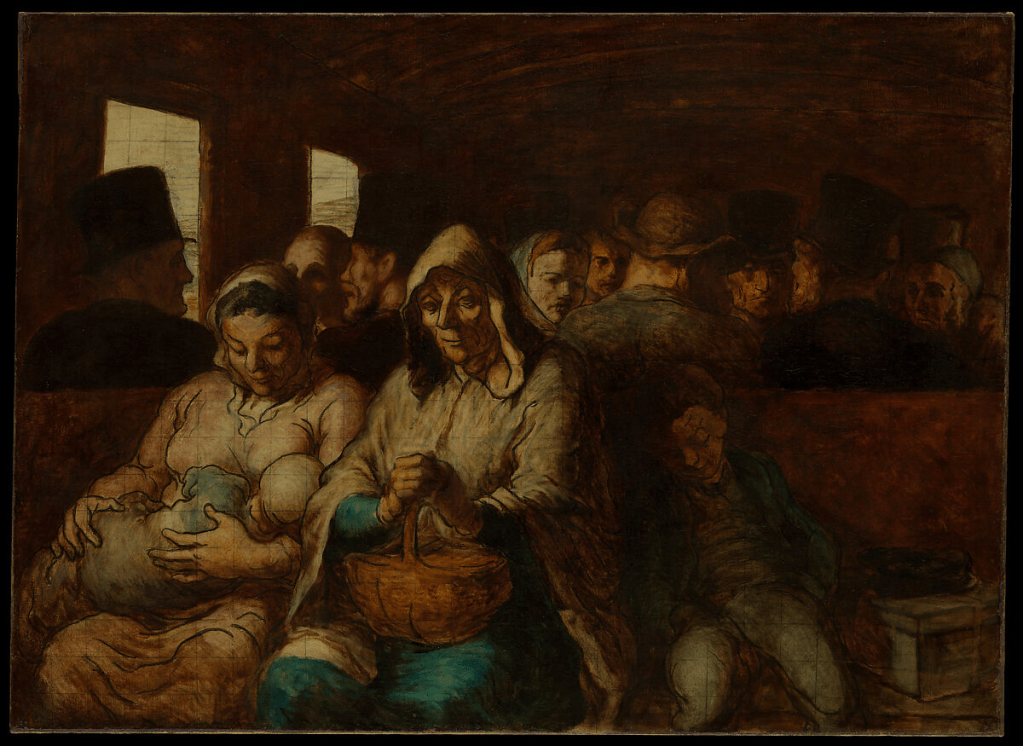
I recognise this same pattern in development work, where I have spent most of my working life. Every consultation, every stakeholder workshop, every household survey we design carries an implicit hierarchy of whose voice we bother to collect. We say we are consulting “the community,” but left to instinct, we gravitate toward the loudest, the most literate, the most reachable — the local leader who speaks the donor’s language, the civil society organisation that already has our number saved, the household along the road we happened to drive in on. The woman selling vegetables three alleys away, the elderly man who cannot leave his house, the person with a disability who was never told the meeting was happening — they go uncounted, not because anyone decided to exclude them, but because inclusion, left unguarded, always follows the path of least resistance. Time and budget in development programming behave exactly like the restaurant matriarch’s attention: they flow toward those already judged likely to matter.
This is why frameworks like Gender Equality, Disability Equity, and Social Inclusion (GEDSI) exist — not as bureaucratic overlay, but as a deliberate correction to that instinct, a way of forcing ourselves to ask, before we call a process participatory, who we failed to see. Genuine inclusion demands the same choice I wished for from the woman in the colourful dress: a decision, made without being asked, to acknowledge someone’s presence before they have proven their worth. We obsess over indicators in monitoring and evaluation, but the indicator that matters most rarely appears in a logframe — whether the people least likely to be counted were, in fact, counted; whether a lone voice in a village of a hundred was weighed as heavily as the chief’s.
Development programming, at its best, is the deliberate practice of making the invisible visible — not as charity, but as discipline. The alternative is a sector that quietly reproduces, project after project, the very hierarchies of power it claims to be dismantling.


