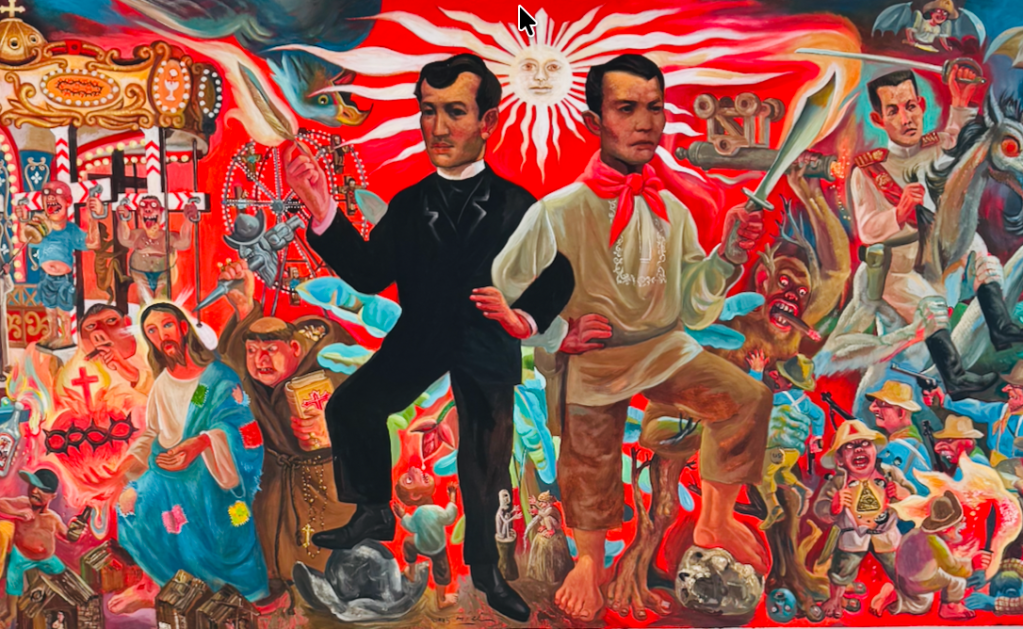
MGA KATHANG IPIS by artist DengCoy Miel, displayed at the BenCab Museum, Tuba, Benguet
I visited Baguio in December last year with my wife and kids. I have been to the city several times, but it was our first trip together as a family. Baguio City is in the northern Philippines. To get there from where we live, we need to take a one-hour plane ride to Manila, then brave a 6-hour drive to the city. Baguio, someone wrote, is a classic example of urban misplanning, and you can see it the moment you ascend to the adjoining town of Tuba, and when you reach the peak that gives you a view of the city.
But Baguio remains a creative pulse of the northern Philippines. One of the reasons we would like to come is to marvel at the art that mushrooms everywhere. Baguio also hosts two of the country’s renowned and enigmatic artists – BenCab (or Benedicto Cabrera) and Kidlat Tahimik (or Eric de Guia).
While BenCab is not from the city, he established his home and studio in Tuba, Benguet. Kidlat Tahimik is Baguio’s illustrious son. Both are declared National Artists of the country, the former for visual arts and the latter for film. BenCab has his museum, aptly named BenCab Museum, while Kidlat Tahimik has his own space, the Ili-likha Artists’ Village.
These museums teach me a lot of things, one of which is the value of openness and its role in society.
Location and Openness
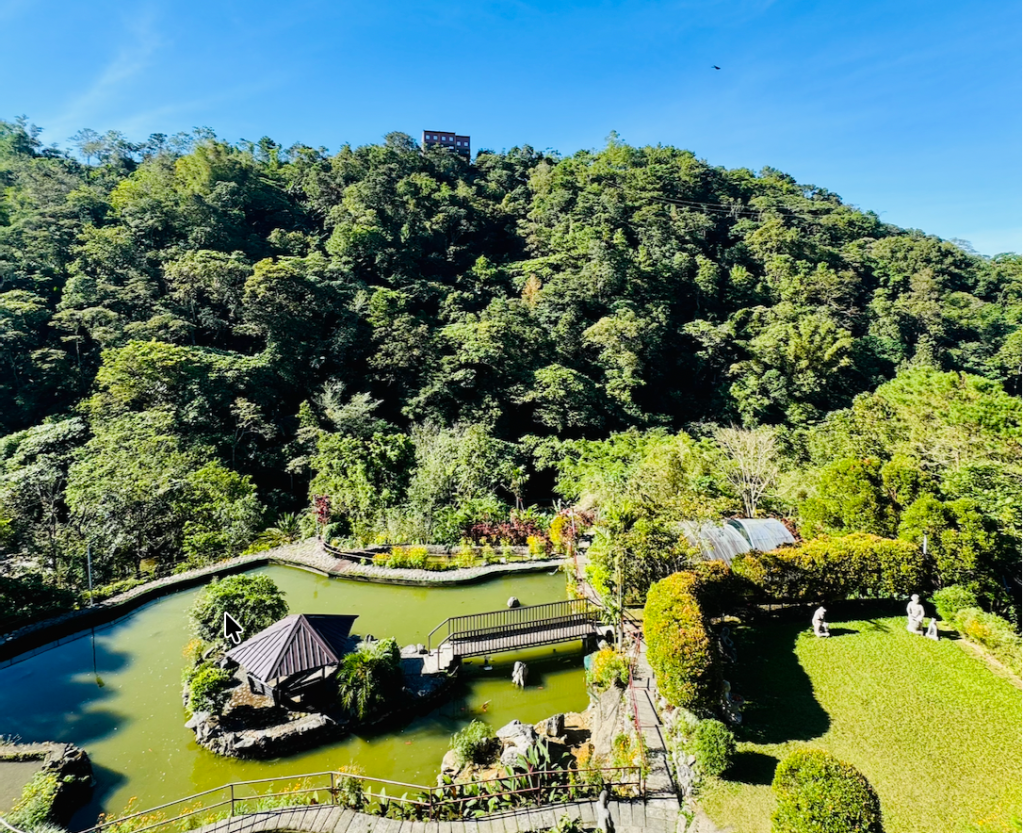
The BenCab Museum, in Tuba, Benguet, is a modern sanctuary that draws visitors away from Baguio City. The role of the location is central to this concept – because it deliberately separates the urban from the seemingly rural, creating a space for reflection, for introspection. As you descend from the museum’s reception, you can see the trees and hear the brook nearby. At the same time, though, distance also sets a subtle boundary—the museum is only available to those with the means and motivation to make the trip.
By contrast, Kidlat Tahimik’s Ili-Likha Artists Village is in the heart of Baguio itself, just a stone’s throw from the famous Session Road. It is located in a lively, ever-evolving environment and invites all passers-by, embodying an open philosophy: art mingles with everyday life, unguarded and accessible.
Gatekeeping and Openness
BenCab’s museum is meticulously curated, as in how galleries in the West are conceptualised and implemented. You go through each room, savouring the stories that underpin personal expressions, indigenous artefacts, and contemporary Filipino works. The way the museum is structured plays a crucial role in preserving, presenting, and protecting culture. At the same time, though, it enforces a kind of gatekeeping. Admission fees, for example, are prohibitive. It’s Php200 per person (3.42 USD), 40% of Baguio City’s minimum wage, and slightly over the World Bank’s poverty line threshold. Physical distance, entrance fees, and curatorial authority can inadvertently empower those who already possess cultural capital, making art and knowledge the privilege of the few.
Kidlat Tahimik’s Ili-Likha seeks to dismantle these barriers. There, curation is a living dialogue. Artists contribute their voices and visions without restrictions, and visitors wander at their own pace, perhaps becoming creators themselves. The space invites creation, is open to reinterpretation and reinvention—and, intentionally, art becomes a process, not a product. This open philosophy challenges a hegemonic narrative that cultural knowledge must come from above, suggesting that participation creates art and that anyone, wherever they are, can be an artist. My art teacher, of course, will vehemently object to this statement.
It is important to note that BenCab Museum is run by a foundation and offers discounted entrance fees. It initiates several community art projects, including support for local agriculture and artisans and the promotion of environmental protection and cultural preservation. It is a philosophy very much in affinity with Western philanthropy.
Openness and the Everyday
BenCab’s museum is valuable because it is an institution that preserves while inviting new creation. Its galleries juxtapose the past and present through a curatorial lens. It houses the region’s artefacts while also showcasing the work of new artists, including that of my friend Ikin’s daughter. It upholds the value of safeguarding heritage, yet the “closedness” of the space—including who can be part of the museum’s world—fuels a sense of prestige and exclusivity.
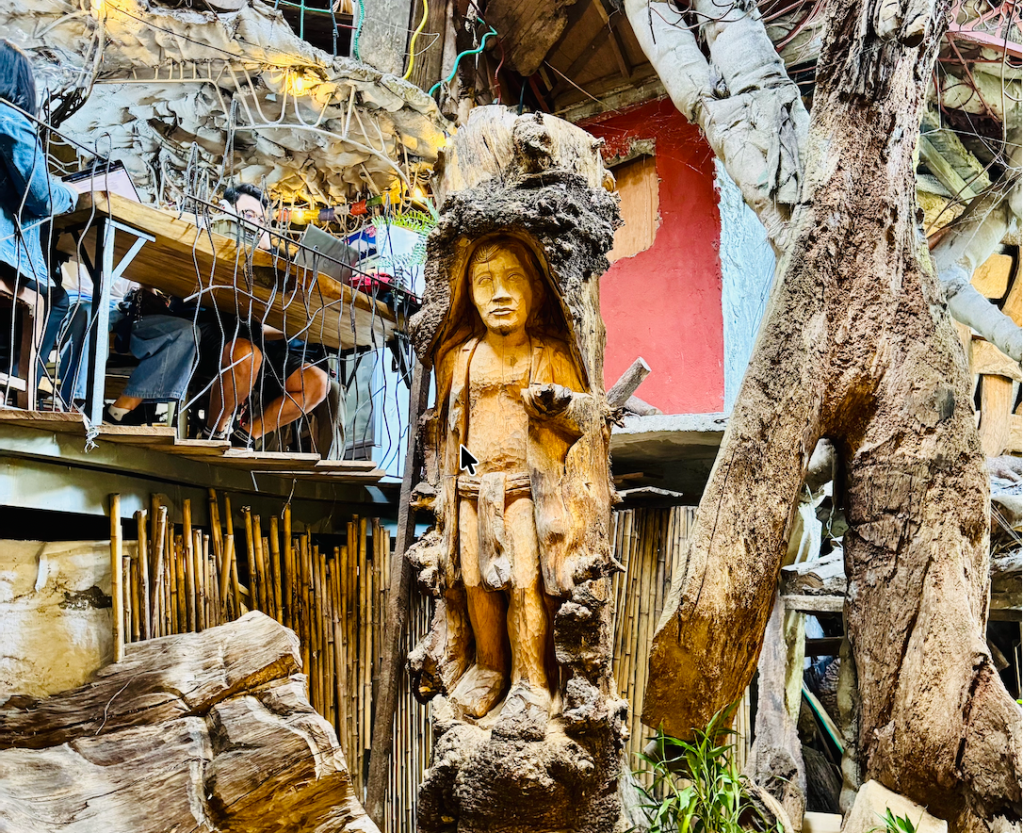
Kidlat Tahimik’s village puts art in the everyday—artwork blends with the food stalls, and sculptures born from scrap co-exist with a store selling souvenirs. Culture does not feel like something preserved but lived, interrogated, and mutated by whoever is there. The open, communal setting breaks down the walls between artist and audience, between the expert and the novice.
Art and the Openness Discourse
It’s amazing how these two art spaces yield many lessons about how we approach life and development. In a world where art is often the privilege of the few – guarded by price, protocols, and power relations—such “closed” spaces inadvertently empowering only the already empowered: those who know, who can pay, and who have the time and resources. The same applies to education and health care—you pay for quality. Only the “haves” can have their day. You succeed in business when you are connected to someone. Life is a colonialist and a ruthless capitalist.
Openness, like open knowledge, open innovation, and open government, seeks to dismantle gatekeeping. Knowledge and creativity aren’t hoarded—they are shared, multiplied, and made accessible to all. The belief is that goodness – good governance, good business, and a good life – is a common resource, catalysing transformation not only for individuals but for the community at large. Openness invites the not-usual suspects, the hushed voices, and fresh perspectives. Open systems are designed to create spaces where responses can be heard, acknowledged, and allowed to thrive. In the case of art, art belongs to everyone. In the case of open systems, everyone has the power, and more importantly, the opportunity to dream, to question, and to change.

 Michael "Miko" Cañares