
Some seven years ago, while working at the Open Data Lab Jakarta, I wrote about three things we learned while attempting to use open data to achieve political, social, and economic outcomes. In that blog post, I emphasised that sometimes our fascination with data or the product we want to produce makes us forget the people, their problems, and the processes of getting to a solution that they own and are willing to sustain.
I had the opportunity to revisit that line of thinking when I went on fieldwork in Stung Treng, Cambodia. The last time I was in Stung Treng was about fifteen years ago, when I was part of a team that evaluated a natural resource management project implemented across three countries, including Cambodia, funded by the Agencia Española de Cooperación Internacional para el Desarrollo.
My current work involves assessing the progress of our partners’ efforts on the ground while learning from the experiences and insights of stakeholders that come with implementing their many activities. One of these trips in Stung Treng was the boat ride to Koh Sralao to visit a family implementing technologies on their farm, assisted by the local civil society group that my organisation funded.
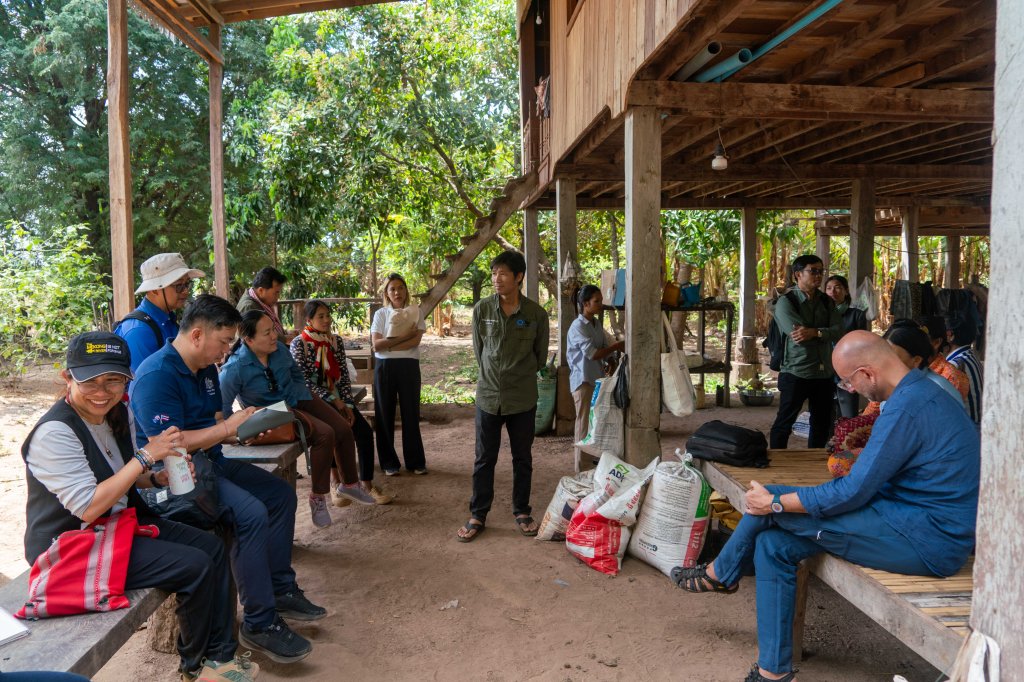
The families we spoke to reported notable outcomes. The most significant was the marked increase in household income compared to baseline data from two years ago. The women also noted that they had more time to engage in various activities, including actively participating in community initiatives focused on environmental protection.
The organisation we funded spoke at length about the drip irrigation technology they introduced and how it made their agriculture-based livelihood more climate-resilient. They emphasised this in their reports, and I was convinced that this was indeed the added value of the initiative.
So, I wanted to test this with the families we visited. I told them I was very happy about the reported income increase and their apparent ability to sustain the various technologies they implemented on their farms. I asked them about the primary reasons why they achieved this level of productivity and its attendant increase in overall farm income.
One by one, the women and men farmers spoke. They discussed their appreciation for the land preparation training, the proper use of farm inputs (e.g., seeds, organic fertilisers, and pesticides), and the training on appropriate and effective farm planning. They expressed how they now better understand the market and how improved market information has provided them with a stronger basis for making decisions about what to plant and where to sell their produce. They also mentioned how they were assisted in finding better markets and linkages with buyers. One of them mentioned that they now sell to one of the resorts in the city.
I had not heard about drip technology from them, so I tried to ask, “What about the drip technology?” They said it did help, but I did not feel the same enthusiasm as when they were discussing all the other reasons identified above. In fact, they had not mentioned it until I raised it during our conversation.
The conversation beside the river reinforced a lot of the things I have already learned in the past.
First, our understanding of what truly matters differs. It is not that the drip irrigation introduced is unimportant. It was part of a suite of interventions, and while it was the highlight for the assisting non-government organisation, it wasn’t for the farmers in the communities that they served.
Second, what matters with people is not the technologies they have been provided, but the changes in how they do things, grounded in their better understanding of the world around them. What mattered more to the people in Koh Sralao was the interventions that enabled them to become better farmers, better planners, and better caretakers of the earth.
Third, listening to people’s stories helps us better appreciate what is important to them, their needs, and how they wish to be supported. Sometimes, when we focus on a technology that we consider valuable or as the solution to people’s problems, we lose sight of the underlying reasons why some issues still persist in communities and fail to uncover the fundamental building blocks of sustainable solutions.
As I passed by the tank that enabled the drip irrigation technology running in their farms, I could not help but smile and whisper, “Thank you, but it is not really just about you. I hope you are okay with that.”

 Michael "Miko" Cañares