I have always been fascinated by the story of the Seven Blind Men and the Elephant. While others hammer on the lesson of limitations on how we perceive reality, this is not what fascinates me about the story. What makes me stand in awe of this great epic is how joining our limited perspectives can have the power to make a better sense of the world we live in.
In my practice as a facilitator, results measurement specialist, researcher, data innovation lead, and in the many roles I fulfil as a husband, child, sibling, and so on and so forth, I do not seek the right solution when faced with a problem. Instead, I typically look for a solution that is owned by the people in the room who have journeyed with me to find answers to the common questions we place on the table.
To arrive at that answer, I encourage people who work with me to work individually at first, and in our solitude and inner soul searching, come up with the best answer we believe in and can put forward. Then, the next beautiful hour is spent discussing what we find and clarifying the values we hold dear.
In my experience, doing this has the power to create something magical, much like how ears, a tail, and a trunk form an elephant. Why?


Individual reflection honours individuality and independent thinking.
We are all products of our experiences. The people we meet, the books we read, and the way we brush our teeth are influenced by earlier experiences, movies we watched, and people we value. When we allow solutions-seeking processes at the individual level, we honour each other’s individual heritage and rich experiences, and we make those layers of creativity spring to the fore.
Providing every single person present with the needed space to create prevents the tyranny of the louder voice.
The blind spot of group processes where solution-seeking is done as a group in the first instance is the tendency of group discussions to be dominated by the fast thinker, the compelling presenter, or the louder voice. Then, everyone else who is slow or less inclined to speak gets left behind. The cycle of disrespect when this happens is just appalling, but everyone brushes this aside, and individual thoughts that are unexpressed become the usual unfortunate victims.
Taking turns to share with others what we discover cultivates listening and empathy.
At the beginning of my career, I was a very impatient listener. I rushed people when they spoke, to the point that I cut their sentences off as they tried, sometimes painstakingly, to make a point. But when I started to accept that alternative views are necessary to create a colourful palette of bright ideas, I became more humble, discarded my foolish feelings of self-importance, and acquired the patience to listen more and appreciate other people’s thoughts and creative processes.
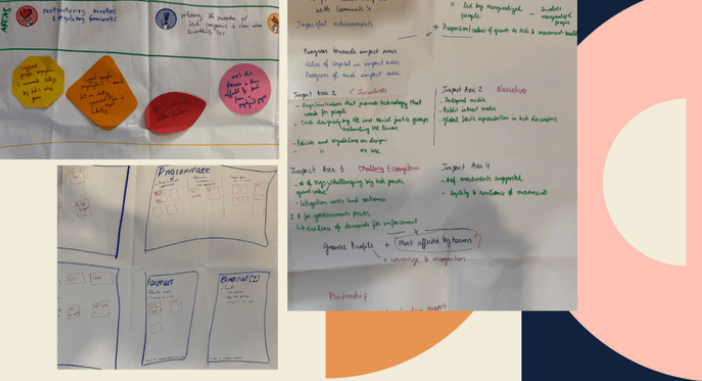
I recently had a wonderful experience while designing a creative workshop with a group of people and working with another facilitator whom I have met for the first time. During this time, I began to realise that the beautiful experience we created for a group of people could not have been possible if we had not come up with our individual alternative designs.
My co-facilitator and I might be regarded as one of the experts in the field (forgive me for the lack of modesty in this statement), but we opted to work individually and develop our alternative designs. Had we paused to consider that the other was the superior designer and delegated the task, we might have missed the chance to create a design that brings together our strengths as individuals and the richness of our distinct experiences onto one sheet.
In another assignment, I was tasked with leading the design of a reporting dashboard alongside a group of younger team members. If I had been my old self during this assignment, I would have proceeded to design it my way and then sought feedback from the team. Instead, I defined the requirements of the assignment together with the team, laid out our objectives, clarified our values, and established our design parameters. We then dispersed to different tables, armed with pens, markers, paper, and so on, to draft our alternative designs. And voila, the creativity we dedicated to the process produced something that was valuable, emotional, incisive, and insightful. Had I attempted this on my own, my output would never have approached what we achieved together.
The power of alternative designs lies in the collective wisdom and creativity that emerges when individuals are given the space to reflect and contribute their unique perspectives. By fostering an environment where every person has the freedom to create, we can overcome the limitations of groupthink and develop solutions that are richer, more insightful, and genuinely collaborative. This approach is not only valuable because it enhances our effectiveness, but is also important as it nurtures empathy, patience, and a deeper appreciation for the diverse experiences that shape our world.

 Michael "Miko" Cañares