I had the opportunity to work with a group of amazing individuals to craft one of the thematic strategies for their organisation. There are several challenges related to the task. First, we come from at least 4 time zones – where one’s morning is the other’s night, and somebody else’s afternoon. Second, the timeline is quite tight – 5 weeks. Third, each one brings a set of skills to the table, but each one also has a full schedule and several deadlines to grapple with – this writing of a thematic strategy is just one of them. Finally, there is no opportunity to gather as a team face to face – we just have to rely on weekly zoom calls and a collaborative writing platform to record our thoughts – and there is no way to schedule a common time working together on the critical document that we were tasked to complete.
My task was to facilitate this process and make sure that we had one coherently argued document that pleases the management team.
To be honest, this was the first online collaboration assignment that I had after so many years. Collaborative writing was relatively easy back when I was still leading research at the Open Data Lab Jakarta. We did not face the challenges I mentioned above. Except for a team leader based in Europe, team members were all based in Asia. And we were all members of the same organisation. But in this task, I was an outsider – and I had to prove my competence and battle for my legitimacy every step of the way. I really thought I would not survive the assignment, but I did.
In this blogpost, I will share how I survived this shepherding assignment and share lessons along the way.
1. Do not assume that your writing team has a common understanding of what you are tasked to do. Clarify first before starting any writing process.
My first biggest mistake was to assume that because all of them comes from the same organisation, we all have the same understanding of the task at hand. I crafted a plan, made an annotated outline, then provided tasking. The initial resistance was flagrantly obvious. I was thinking it was about my poor methods, but it was not. The resistance came from the fact that the team did not have the same understanding of the task at hand. So before you start any process, make sure that all members of the writing team have the same baseline understanding of what has been done before, why the previous work has been insufficient, what is the ask for this writing exercise, and what the expectations are in terms of output, content, and format.
2. Ensure that the mental frames that you will use is something that your writing team has a handle on.
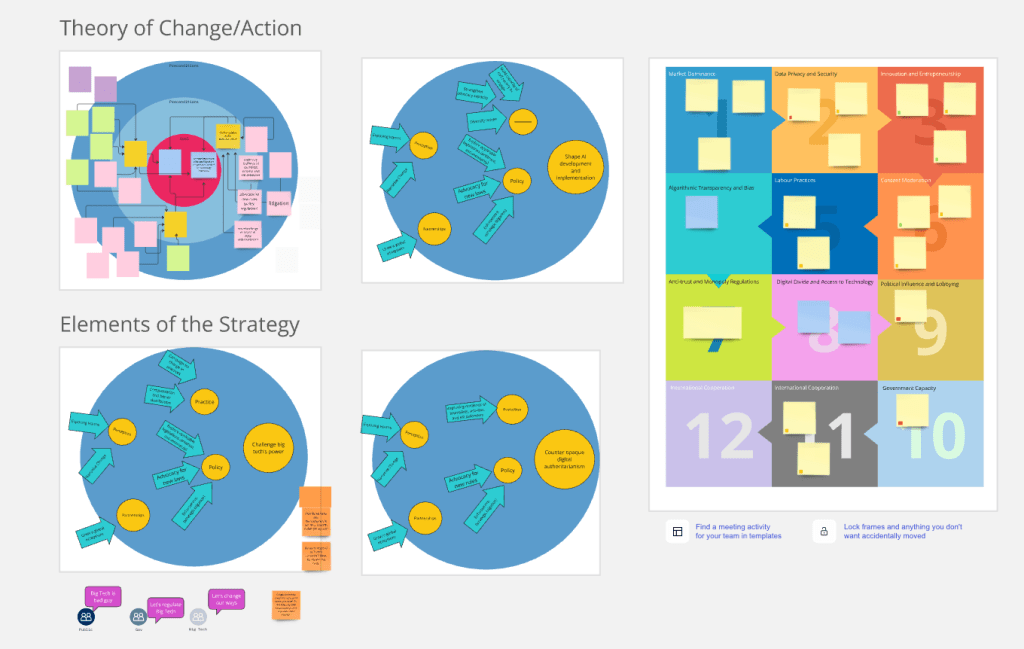
My second biggest mistake was to assume that everyone has a good grasp of the mental frames I would use in the collaborative writing exercise. For this particular assignment, the organisation wanted me to make use of one set of popular tools/mental frame which I thought every one was familiar about. I did not conduct any intro to the method, nor provided a set of readings for the team so they can understand the terminologies I was using throughout the tasking meetings. Had I asked at the beginning whether they are familiar with the method, the first few weeks could have been a lot easier. I could have done a quick training, or referred them to a set of readings available online. The latter I did, and it helped the process. Had I done it earlier, the process of writing could have been a lot faster.
3. Divide the task into manageable chunks that you can spread across the writing timeline.
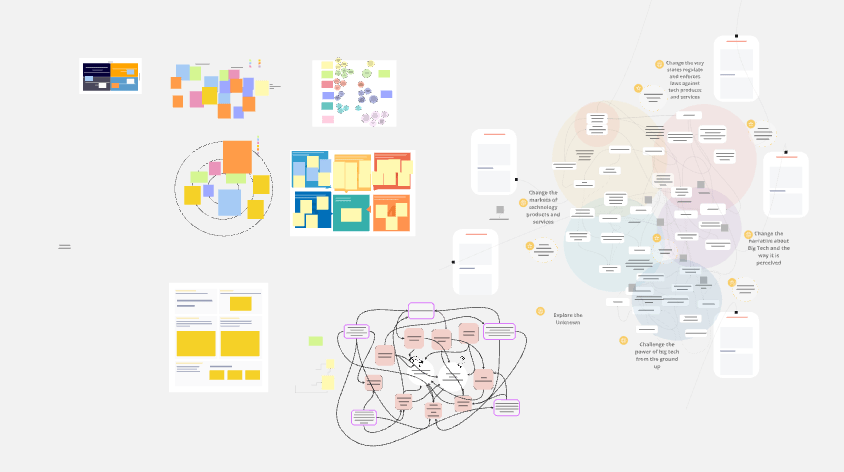
One of the right things I did was to subdivide the task into smaller assignments that the team can do over a week’s time. We had a weekly meeting so these assignments were given and discussed during the meeting, with team members expected to turn in their contributions the week after. I made sure I had the chance and the time to review their contributions before the next meeting so progress was recognised, celebrated, and used as the basis for the next tasking.
4. Be very explicit in the writing rules and ruthless in implementing them.
Because we were working asynchronously, a collaborative writing platform was used and people were asked to use “track changes” the whole time and write as comments those suggestions that can’t be inputted directly into the paragraph’s syntax. I was very strict in enforcing the rules at the first instance and team members followed them religiously until the end of the assignment. Also, each week I created a version of the document to work on. The week’s version became a record of that week’s work. As a result, we had layers of copies of the strategy paper, from week 1 to week 8, that documented how our thinking changed over time. This really came handy, because things that we discarded in previous weeks could be brought back in when we decided that there were outstanding paragraphs that can be incorporated into the current document.
5. Use a communications channel that people regularly access for “spur of the moment” inspiration and quick comments or questions.
While most communication was done via email and through the collaborative writing platform, we decided to use an instant messaging platform for quick questions, suggestions, or to communicate inspiration. We also used it to inform others if someone got sick and wouldn’t be able to contribute, or when people would be late for a scheduled meeting because of unforeseen circumstances or events. I found this also very useful especially during the last few days in the run up to the deadline – as we no longer had a time to meet and the platform became a proxy for a virtual meeting space.
6. Stock up on a lot of patience.
Managing a process where your participants are busy experts was tough. In my experience, there were times that I feel like my suggested methods were useless or my strategic inputs did not make sense. There was a time over the course of the assignment that out of frustration, because our meetings were not getting anywhere and we were not moving an inch towards the envisioned output, I wrote this email to the team:
I will ask you to trust this process for now. I promise this is getting somewhere. As mentioned, the previous paper is a great place to start with, and we are not necessarily veering away from that. I want us to take a step back, do a fresh take on our thinking, and refresh what we have initially thought as a plausible pathway to getting there. If we end up where we started, at least we have confirmed and made our arguments more solid. Thank you.
Looking back, I must say I learned so much from the process. I learned so much about myself, and also of the team members I was working with. It was not easy but it was gratifying at the end. We arrived at a document that I think most of us were happy with, and more importantly, the management team was pleased to receive and read.
How about you? Do you have a similar experience? Do share!

 Michael "Miko" Cañares