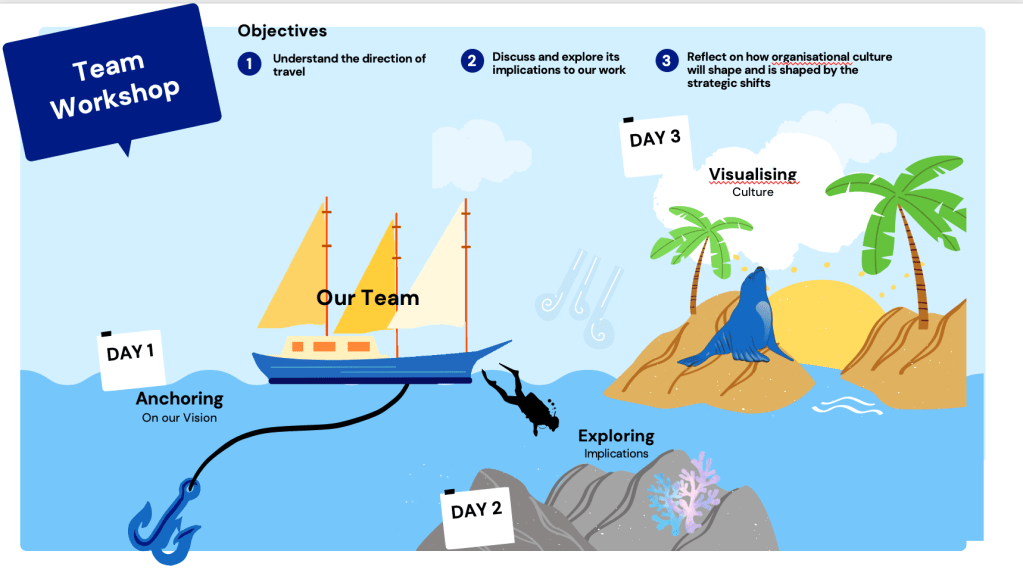
Five months ago, I was on a plane for Malaysia for a research project and happened to sit beside a senior-level executive of a philanthropic foundation who said she was “attending an annual workshop.” The choice of words may not have been intentional, but I was struck that several of us use the word “attend” when we are going to a meeting, workshop, convening, conference, or any type of gathering where people come together, talk about things, and then leave. But when we go with friends on a hike, we normally use the word “join”. We “take part” in protests and demonstrations. We “engage” in a debate on issues that matter to us. We “participate” in an exchange program. But we “attend” meetings and events.
Maybe because, in several of our experiences with convenings (this word I refer to activities where we gather together, like in a meeting, a workshop, a conference, a convention, or a training), our roles are just to be there, along with others. We rarely have the chance to shape the agenda. We need not speak or do something. We can plainly watch and only exercise our conversational skills when we talk to people during breaks and lunches. Truly, if this is what happens in a convening we go to, attendance is the correct word.
The other reason is that our convenings are probably poorly designed. They were designed around objectives, which, for the most part, are only considered as “rational”. When I started my work designing and facilitating conversations, I was introduced to the Institute of Cultural Affairs’ flagship methodology, referred to as the Technology of Participation, where objectives for convenings focus on at least two types of objectives – rational and experiential. Rational objectives are the “intent or practical goals of the conversation and guide the collective thinking process and
determine the direction of the conversation”. Experiential objectives, on the other hand, are the inner impact and overall experience of the conversation on the group. It sets the mood of the group and the tone of the conversation.
Thus, I would argue that convenings should be designed as “experiences”. One consulting company calls this process “experience design” and defines it as a process of “crafting every facet of an event with the attendee’s journey in mind”. It further elaborates by saying “It’s not just about conveying information; it’s about creating memorable, immersive experiences that resonate with participants long after the event is over.” But how can we do this? Below, I outline two main areas where we can make experiences in convenings better – principles and practice.
Clarifying the Principles
Based on my personal experience, these are the principles I adhere to when I design convenings as experiences.
Focus on People. It is important to remember that convenings are designed for people. It is their experience that matters.
Different strokes for different folks. People experience the same things differently. Some respond more to visual cues. Others want to hear things to feel things.
Connect people to purpose. You run convenings to achieve a purpose. You need to be able to find people’s emotional connection to the purpose so they remain invested in the process.
Weave a coherent narrative. Design an overall experience, not piecemeal topics and activities that are nice but do not form part of a story attached to the purpose.
Give participants control. While you design based on your set objectives, allow participants an element of control in different ways – by asking them for their preferred agenda and structure through a pre-convening survey, allowing them to choose groups during breakouts, or define their own topic to talk about during un-conference sessions.
Cultivate an “aha” experience. Surprise participants at particular points in the design – either by incorporating fun ways of meeting others or contributing to a puzzle at the end of the day.
Participants need to have clear roles. Make sure that they are not just attendees. They should be able to contribute their ideas and insights. Give them opportunities to speak and present. No one should be just a spectator of a death by PowerPoint session.
Cultivating the Practice
Here I outline what I normally use as a set of processes in designing convenings as experiences. These three tools are (1) experience map, (2) journey itinerary, and (3) precondition checklist.
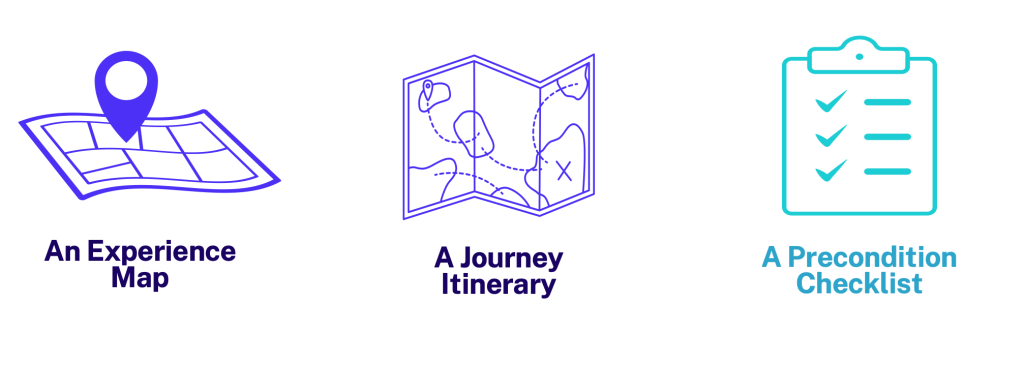
An experience map is a collaborative visual representation that captures the envisioned participants’ collective journey during a planned convening. It involves mapping out the various stages, touchpoints, emotions, and interactions involved. Normally, what I do is to work with a planning team from within the organisation I am working with and let them imagine how, for example, a three-day event would be. I try as much as possible to make the “envisioning” process a sensory experience. What colours will greet them as they arrive at the venue? Will the smell of coffee and freshly baked bread dominate the space? Who will greet them? What music will we use? Then bit by bit, we imagine how the whole experience will look, hour by hour, day by day. It takes a lot of patience to do this, but a lot of excitement as well.
A journey itinerary outlines the schedule, activities, and key milestones that participants will experience prior to, throughout the duration of the convening, and after the dust has settled. It serves as a roadmap or guide for participants, facilitators, and organizers, providing a clear overview of what will happen prior to, during the workshop, and when participants will go back to their work stations. While the experience map focuses on the actual date of the convening, the journey itinerary plots the overall experience, because oftentimes, a convening will only be a portion of that whole experience. And this can potentially involve pre-work on the part of those attending the convening.
A journey itinerary, for me, involves at least three processes – ignition, acceleration, and cruise control.
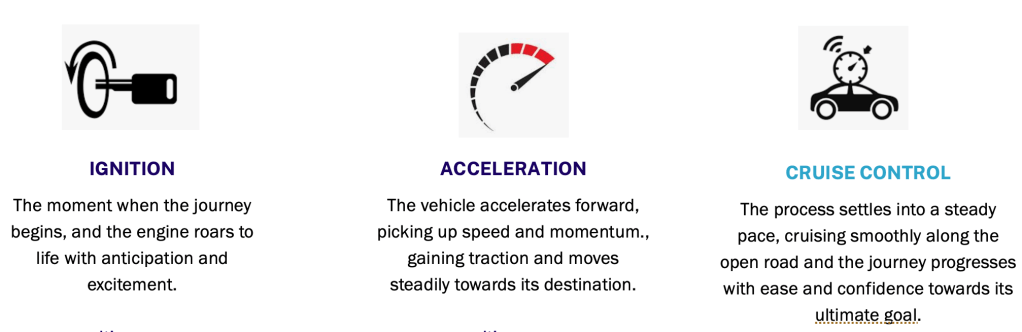
- As an example, ignition may involve weekly announcements and priming prompts, including a discussion on what people need to prepare for. It will also include a survey of what people would like to achieve at the personal and organisational level and how they envision the convening would look like. The survey will need not have a lot of questions. In one of the convenings I recently designed and facilitated, I only asked three things (See sample questionnaire below)
“Imagine yourself coming out from the last session in this coming event. Fill in the blanks below with your best answer….
I am very happy because we were able to ________________________.
The most important discussion for me was _______________________.
Anything else you would like to share? ___________________________.
- Acceleration refers to the actual workshop itself. Based on the journey map above, this is where together with the planning team, we will clarify the “acceleration snapshot”. In the case of convenings that deal with organisational issues and directions, I clarify what we want every individual to achieve at the thinking and feeling level so that they will be able to translate these into actions for themselves and for the organisation. For example, I structure an objective-thinking exercise in the following way below:
During the convening, I envision that participants will be able to (think and feel)________________________
So that they will be able to (act)__________________________________
So that we will, as an organisation, will (collective aims) _______________________________.
- Cruise control will deal with post-convening processes that intend to strengthen the convening’s results and make participants remember and value the discussions. This will include the structure of the closing activities, a post-convening evaluation that focuses on key learnings, a thank you email and sharing of evaluation results, and sensing processes.
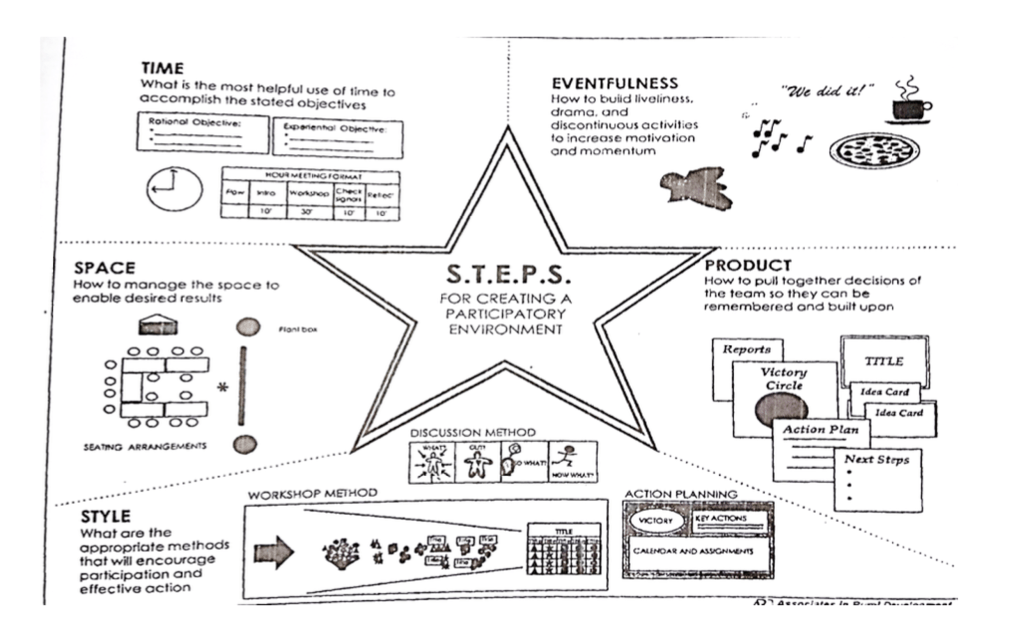
Finally, a precondition checklist is a list of items or requirements we need to fulfil or have in place before we can effectively implement the experience map. This will include pre-event conditioning processes, speakers/facilitators, space and logistics, and workshop materials. When I was working on a participatory governance project 20 years back, there was this codified list of things on how to create a participatory environment that has helped me until now in preparing precondition checklists for convenings. It has a really good mnemonics – STEPS – for space, time, eventfulness, product and style.
Hope you find this useful. If you have questions or want to discuss your approach as well, do put comments below or send me an email. It will be good to learn from you.

 Michael "Miko" Cañares