Some four weeks ago, I was invited to facilitate a day’s discussion on learning and impact to roughly 80 people, representatives of around 40 civil society organisations from Kenya, South Africa, and Nigeria.
The rule of thumb? No slides. No use of online tools as Menti or Miro.
I found the task daunting at first. While I am not a heavy slide user when doing trainings or workshops, I do use slides as my process prompters and as a way to get some key points across. I tried to reason out that I needed slides for the visual learners, but that was not accepted. After all, we did grow up learning our ABCs without a single PowerPoint slide in sight.
I took the challenge to heart. In this post, I will describe my thinking process of getting to that state where I became comfortable that I could achieve the workshop objectives without having to rely on single slide as my backdrop.
1. Allocating time to achieve your purpose.
Of course, everything starts with clear objectives. I know that they wanted me to talk about learning and impact, its importance to organisations, and concrete steps in enabling them. Based on this set of objectives, I made various prototypes of how I could better use time. More talk from me? More participant interaction? Sharing from participants with experience on the two topics?
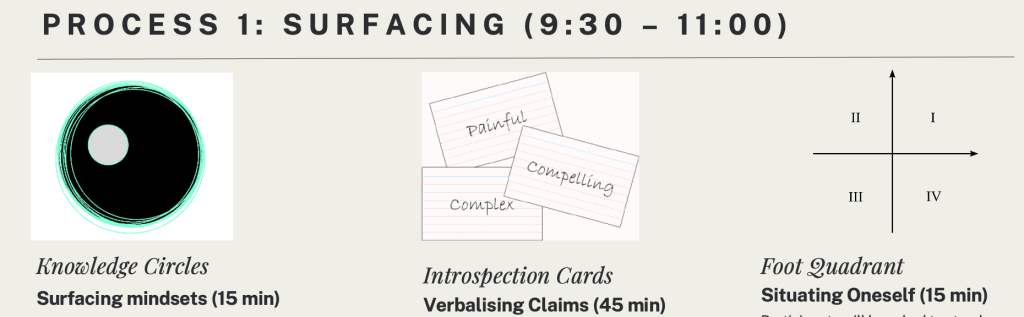
Creating a well-structured agenda with clear timelines for each activity is essential. Based on the objectives, I broke down the workshop into manageable segments, allocating sufficient time for each part while ensuring a balance between content delivery and interactive engagement. I used time strategically by incorporating activities such as group discussions, hands-on exercises, and reflection sessions to reinforce learning and maintain participant engagement throughout the day.
2. Managing eventfullness.
To infuse liveliness and “drama” into the workshop, I needed to incorporate dynamic and interactive elements that captivate participants’ attention and increase motivation. I introduced surprise elements, such as lightning talks, interactive games, or simulations, to create memorable experiences and stimulate active participation. I also utilized moderated storytelling techniques to illustrate key concepts and evoke emotions and foster deeper connections and engagement among participants.

One very basic example is how I used dance and music to begin the session, interspersed with introduction and getting-to-know-you questions that would allow participants to talk to each other, something that they did less in previous sessions. One of the participants approached me right after the dancing activity, saying it was the best unfreezing activity she had experienced so far, but still replete with realisations about individual giftedness.
3. Planning the use of space well.
Effective space management is crucial for facilitating a workshop. The good thing about workshops without slides is that I don’t have to worry about where the screen will be placed and whether participants can access it effectively. While I was still designing the workshop, I asked for pictures of the room we would use and whether there was a garden next to the hall that we could potentially use.
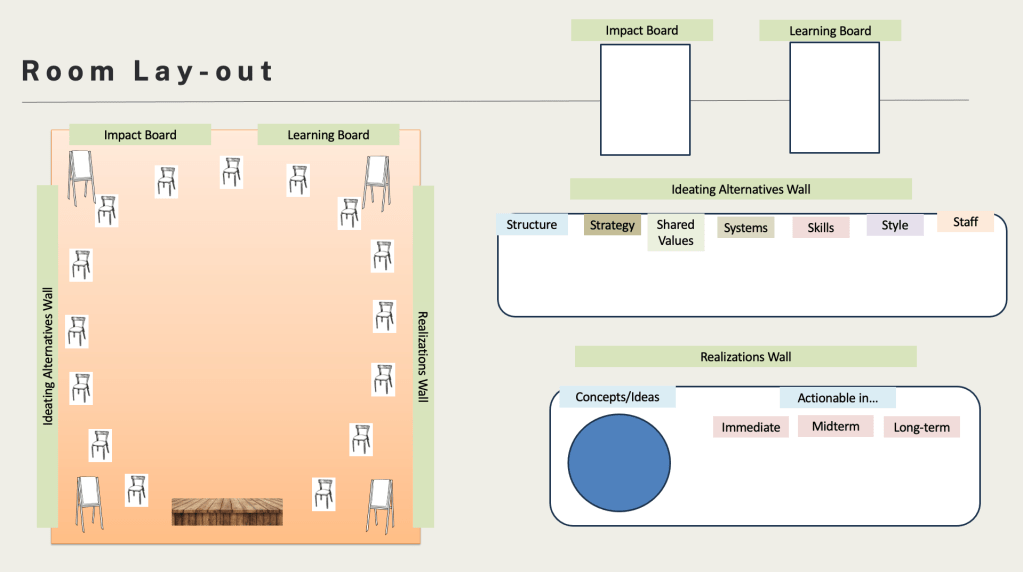
As I wrote the detailed session guides, I imagined and drew what the room would look like. I need to ensure that there is ample space for movement and interaction, allowing participants to engage in group activities that I designed comfortably. I also ensured that I arranged seating in a conducive layout that promotes communication and collaboration. In this case, I opted for a u-shaped theatre-type seating of two rows that occupies the whole hall, working with the banquet manager when I arrived at the venue to ensure that I got the right configuration I wanted. To replace the projector, I utilised physical props, flip charts, and the hall’s sidewalls as idea boards so I could strategically use them to facilitate discussions and visual representation of ideas.
4. Using a variety of facilitation styles.
To enable active participation and engagement, I need to employ a variety of interactive methods and facilitation techniques tailored to the workshop objectives and participant preferences. I had to choose my words right to encourage active listening and critical thinking. I needed to infuse creativity through open-ended questions and small group discussions as well as problem-solving exercises. To surface expertise among participants, I ran a pre-workshop survey to know which among them has the best examples on the topic that I wanted them to share in the plenary. I ended up selecting three participants to do 7-minute lightning talks. This session created a supportive and inclusive environment where participants feel empowered to share their ideas and perspectives.
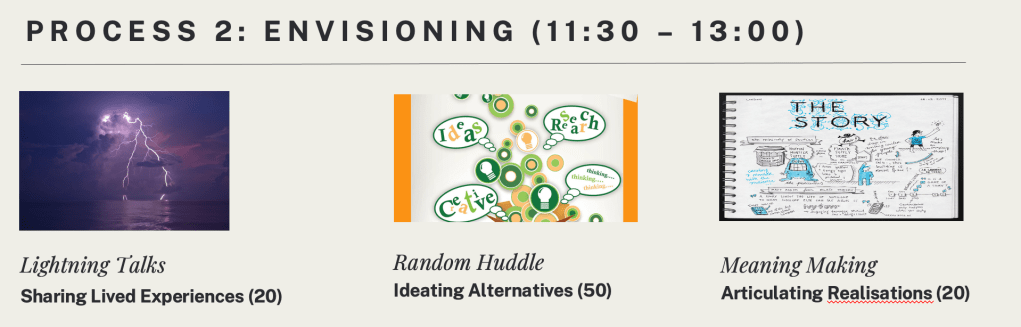
The sessions above were all participant-led. I was just at the corner giving out instructions and keeping watch of the time, as there is this tendency of people with very rich experiences to keep on talking, so this was something I need to manage. In this case, I did not provide the content – they all collectively defined their own learning journey.
5. Ensuring you are journeying towards the desired product!
To ensure decisions made during the workshop are remembered and acted upon, I employed effective strategies for synthesizing and capturing key insights and ideas, and ask participants to come up with specific action plans. I used concept maps to summarize key takeaways and decisions made during discussions.
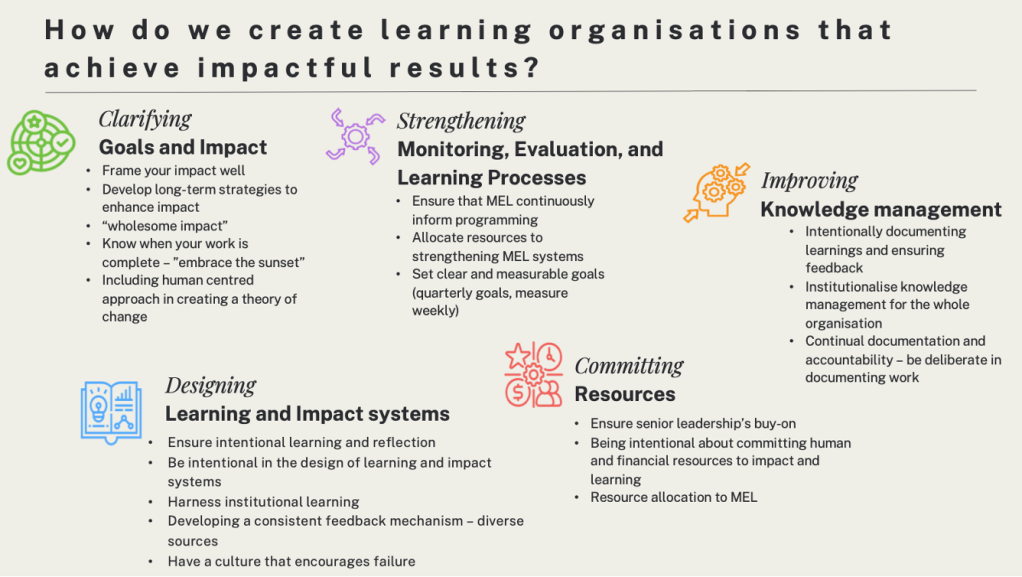
The visual above summarizes the actions we generated from the session. At the end of the workshop, I gave participants this one-pager outlining key concepts and action steps that they said they would consider to improve impact and learning practices within their organisations.

 Michael "Miko" Cañares