I once thought that establishing collaboration is straightforward, not until I had an opportunity to facilitate a conversation between two mission-driven organisations whose work has been significantly influential in helping women realise their roles as agents of change. I was in Taipei for a Christmas holiday with my wife and kids when, out of the blue, the awesome Jac sm Kee of Numun Fund sent a message asking if I was interested in facilitating a collaboration workshop.
Needless to say, I am a fan of Jac, a writer, activist, forward-thinker, an awesome facilitator, and an instigator of all good things to make the internet safe and healthy, especially for women. To say that I was honoured to be asked to do work for her was an understatement. And it was very scary, to say the least.
Numun Fund, where Jac Kee is chief cartographer, is brewing a collaborative funding initiative with an equally amazing organisation, Purposeful. Purposeful is an Africa-rooted global hub that seeks to amplify girls’ voices, building solidarity between and across girls’ movements, and supporting innovation in grassroots programming. Numun Fund, on the other hand, supports feminist tech infrastructures in the Larger Majority World, aiming to shift and redistribute power and resources to feminist and women/trans-led groups.
The workshop was held in the beautiful Shorea Estate near the Berembun Forest Reserve in Seremban, Malaysia. In attendance were Jac and Syar Alia for Numun Fund, and Liesel Bakker and Ruby Johnson from Purposeful. When I did a profiling of participants as one of the preparatory activities to design the workshop, I was floored. I regretted it too late. This should not have been something that I should do in front of four seasoned facilitators. I was afraid I might be tongue-tied in the midst of the greatness. But there is no turning back. Contract has been signed and flights were already booked. My important question then was, “So how do I do this?”.
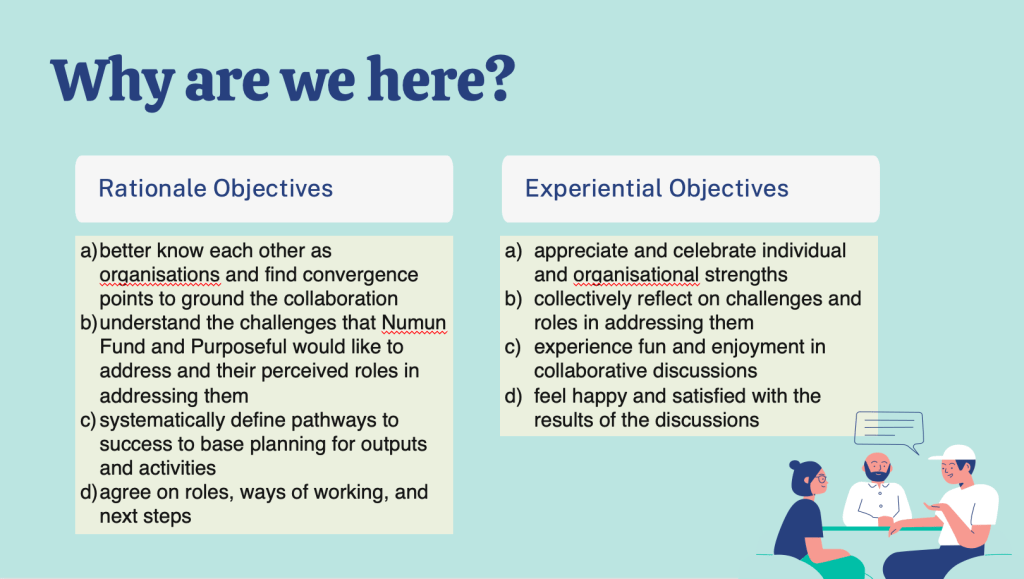
First, it helps to define objectives clearly and design a pathway of getting there.
Through a call and a series of emails, I got to understand what the objectives were. I read through the relevant documents and the process they went through so far. I circulated the objectives I articulated based on the conversations I had with the participants to ensure I got it right.
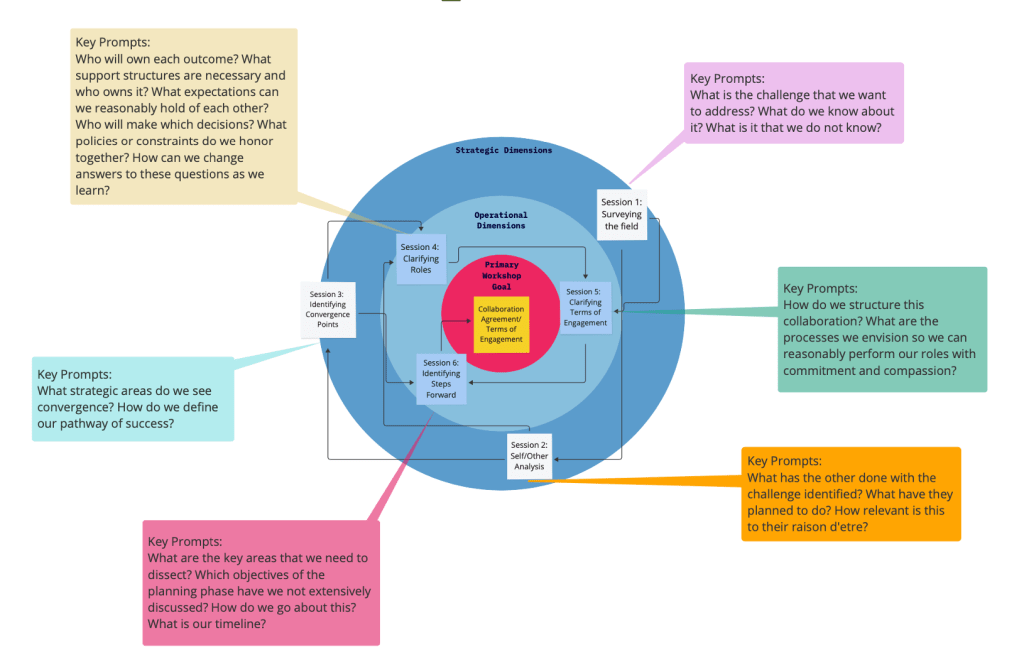
Then, based on that, I drew a visual diagram of the design. The visual diagram is a pathway for getting to the objectives we have defined above (See below.). I ran the visual diagram with the rest of the participants to see if there were things that I needed to revise or improve on.
After getting the comments, I made the slides and the worksheets. I wanted the process to blend offline and online processes and make use of physical workshop templates, ideacards, postits and other materials as much as possible. This somehow built my confidence to proceed.
Second, it helps me to know the participants better. It helps too to make the participants know each other better.
I had to profile participants based on their digital traces. I have to forget about how great these people are and focus more on what they like, how they view the world, what were the things that they care about. I am sometimes a reckless talker. These women get their language right all the time. So, that makes my job more daunting.
I also asked around if they had had the chance to talk more deeply about themselves and their organisations. That seemed to be not the case. Thus, I needed to do some preliminary foundational activities. So I designed three activitities for them to know each other and their respective organisations better. I used three processes here, as indicated in the slides below:
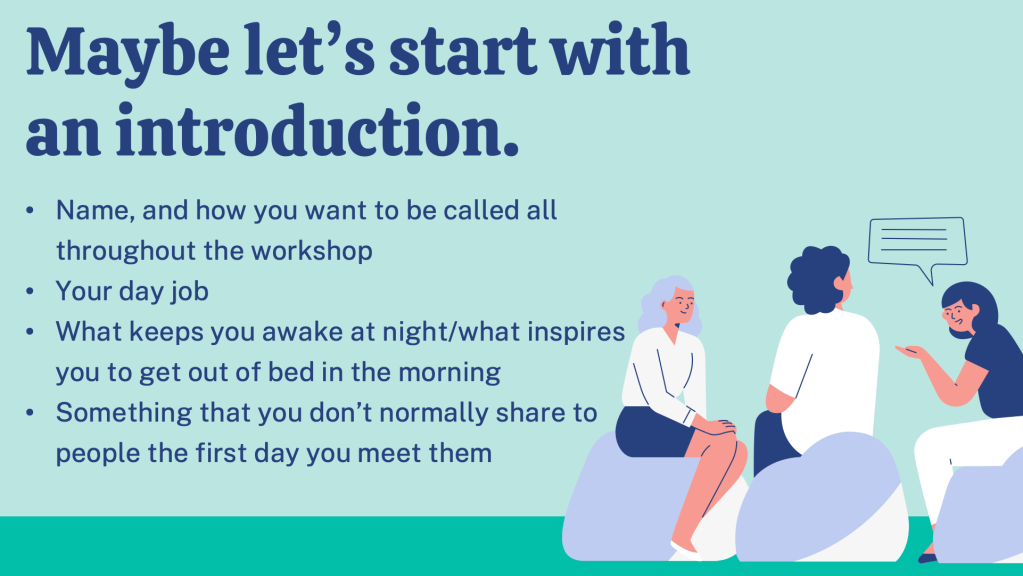
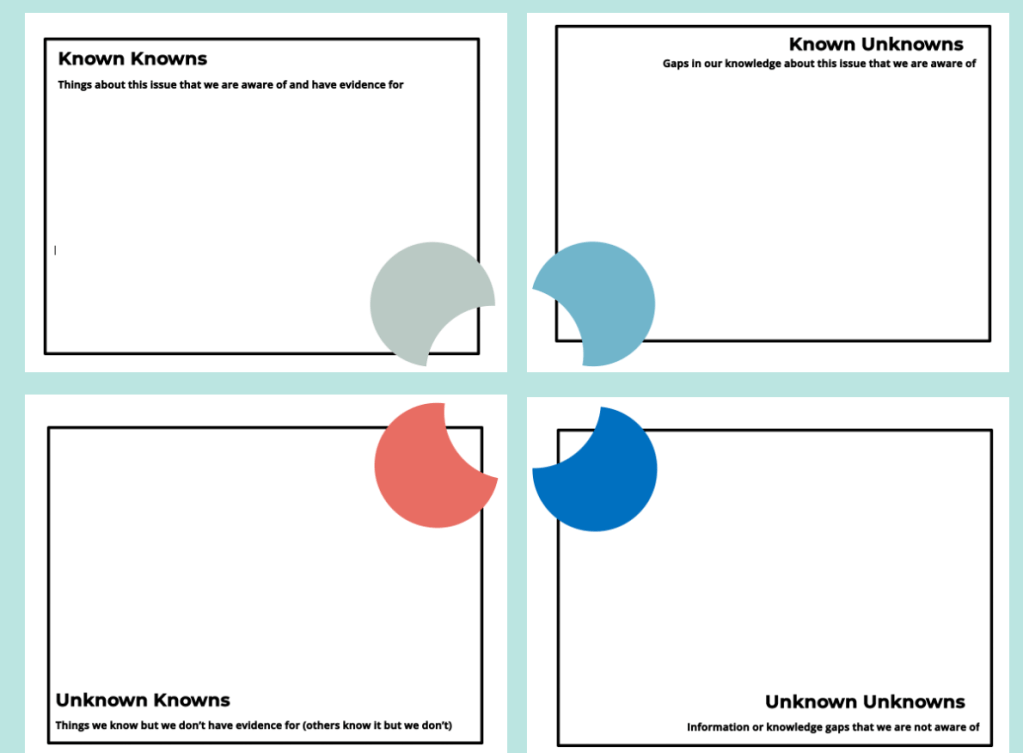
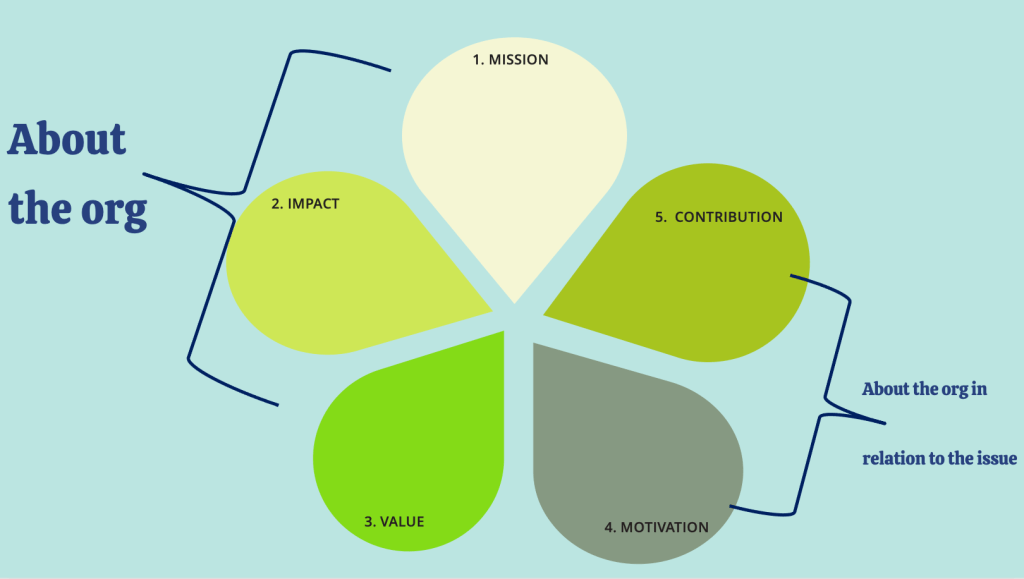
I found these three activities insightful. I’d like to think that it provided not only an opportunity for the participants and their organisations know each other better, but also an important grounding for all the discussions that will happen in the succeeding sessions.
Third, it helps to determine participants’ readiness to engage in productive conversations and define common values to ground the convening.
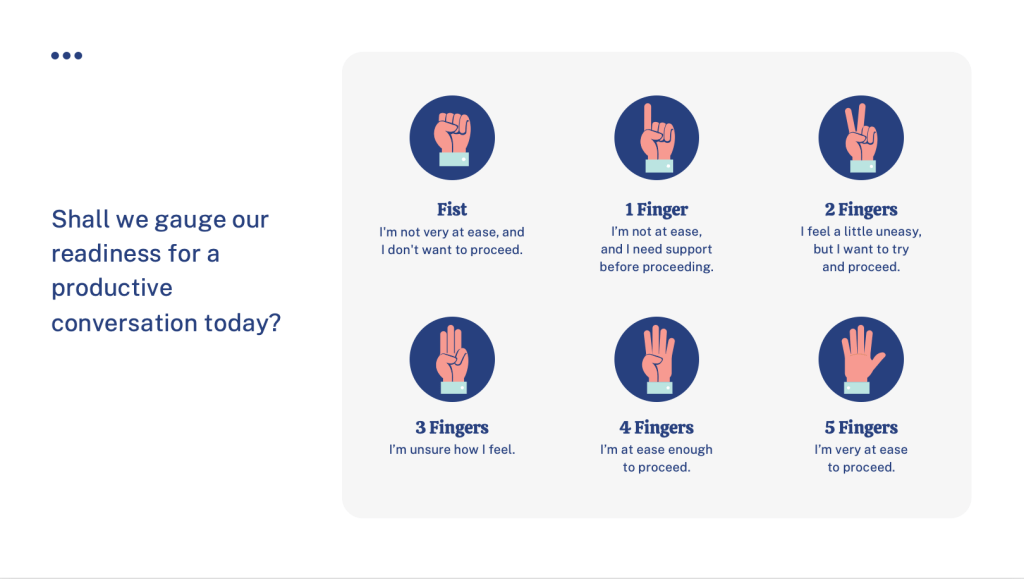
I did the exercise above to ensure that participants were comfortable with going ahead and diving into the workshop agenda or whether I needed to do more “conditioning” exercises. Good that almost all had the 4-finger feeling, so we continued with the rest of the activities for the day.
Also, we agreed on a set of values to govern the conversation. Sometimes, we don’t seem to think these are important, especially when you are with people you trust. But I still see the value of articulating what should seem obvious – as it makes explicit what people hold important, especially in ensuring that conversations are productive and safe.
Fourth, it helps that the pathway towards establishing better collaboration is clear.
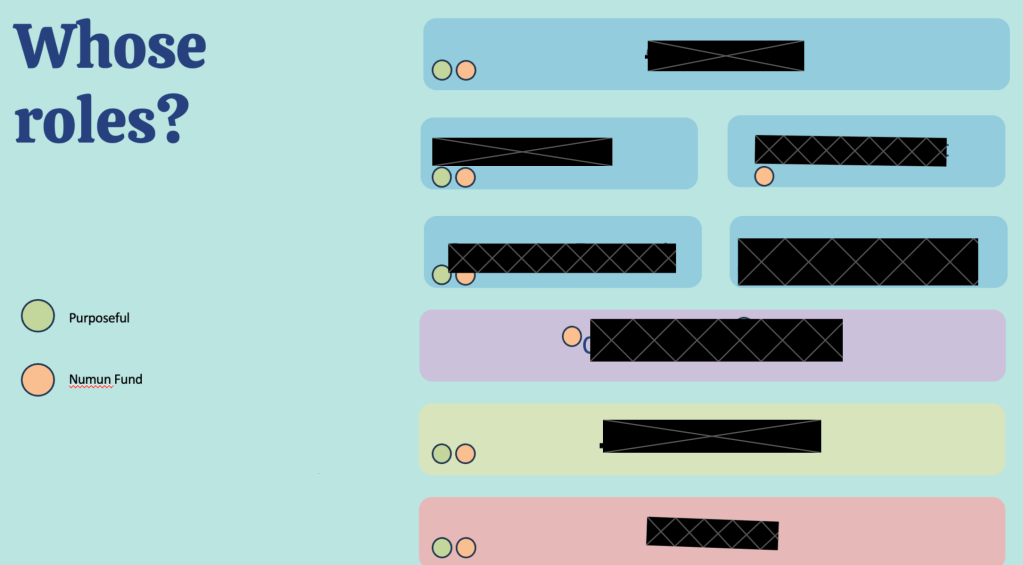
In this case, we looked at two layers of discussions – strategic and operational. At the strategic level, we defined the common challenge the two organisations would like to address, the objectives they would like to achieve, what they would like to do, and who they would like to involve in the process. At the operational level, we clarified the roles of each organisation, the terms of engagement, the action plan for the whole duration of the collaboration, and a high-level working budget. The visual below, for example, provides an overview of shared roles and processes:
Finally, it is important that discussions are documented and major agreements are recorded and agreed on.
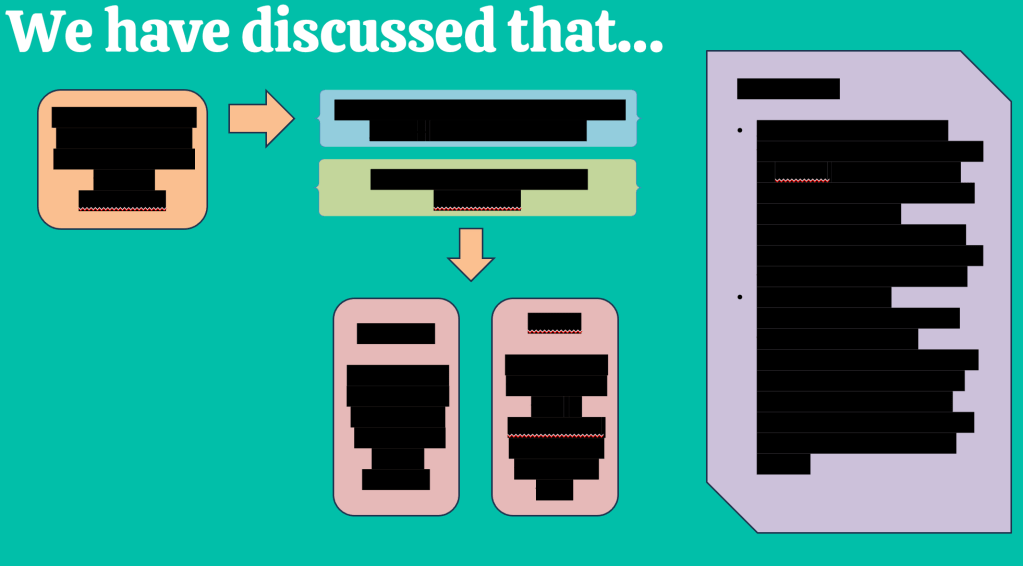
The major challenge in conversations is how discussions, processes, and outputs are documented. In this case, we resorted to recording the conversation as an audio file, while the participants took turns plugging them in to a shared document. I spent almost the whole night listening to the recorded conversations again to capture key agreements and summarise progress, along with the nature of the discussion, even those we had post-session during a tea break. It is important to be clear which have been discussed but not agreed, and which are finally settled as key decisions.

To be honest, I was not sure if the convening was able to achieve the objectives we defined at the start. Only the folks from Numun and Purposeful could say – though they did say at the end of the workshop that it was a helpful process for them. I wish them well in finalising the collaboration document that they will prepare after the workshop and hoped that what we went through over those two days helped.

 Michael "Miko" Cañares