
One of the things that make trainings difficult in work contexts is its potential to disrupt workflows and regular operations. The usual solution is to send people to a location away from work, for a few days or so, and pack a program with all things people need to learn, hoping that such investment of time and resources will work. Some human resource people I know frown at bite-sized learning activities, arguing that dividing a learning topic into digestible chunks makes learning fragmented and will fail to deliver comprehensive learning of complex topics.
I tried to experiment with bite-sized learning activities in my current role as Program Performance and Quality Advisor at Mekong Australia Partnership – Water Energy Climate. My goal was to strengthen knowledge and skills of investment managers in monitoring, evaluation, and learning (MEL), so we, as a team, will deliver not only impactful programs but also share a compelling narrative of accomplishments based on available data.
However, investment managers rarely have the luxury of time to sit through a two-day MEL training program, and given the fact that the team is dispersed across four geographic locations, finding a common time to bring them into one venue to deliver a synchronous face-to-face learning activity is virtually impossible. So, I experimented with a micro-learning format, delivered onsite and face-to-face in three locations (Bangkok, Vientiane, and Phnom Penh), on very specific topics that are work-task focused and very much in line with their key responsibilities. Based on participant feedback, I believed that bite-sized learning activities can work, even for a complex topic such as MEL.
I outline here the steps needed to make it work:
1. Have a good understanding of the people in the room, their background, skills, work functions, and learning aspirations.
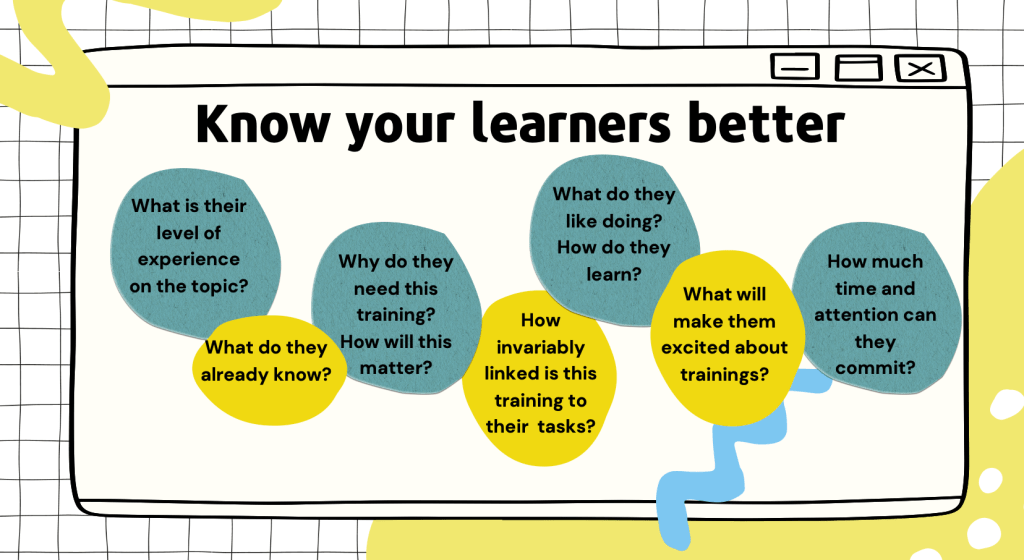
Oftentimes, learning facilitators do not care about what their participants. They go to trainings and just deliver content. But for trainings to be meaningful, they need to be suited to trainees’ needs and contexts. The good thing about training your team members, like in my case here, is that I work with them and have meaningful conversations with them over the course of the last year – providing me a glimpse of who and how they are, in such a way that answers to the questions in the graphic above come easy.
But I do extend “knowing methods” beyond this – by getting more of their profile by looking at their digital traces, by looking at their work outputs that has gone through my review, by doing textual analysis of emails that I receive from them – to reveal patterns of preferences and attitudes towards certain topics and towards certain types of learning methodologies. A learning facilitator of mine told me once, “know your content, trust your participants”. One of the most basic steps in trusting something is knowing them.
2. Clarify expected learning outcomes based on work requirements and people’s learning objectives.
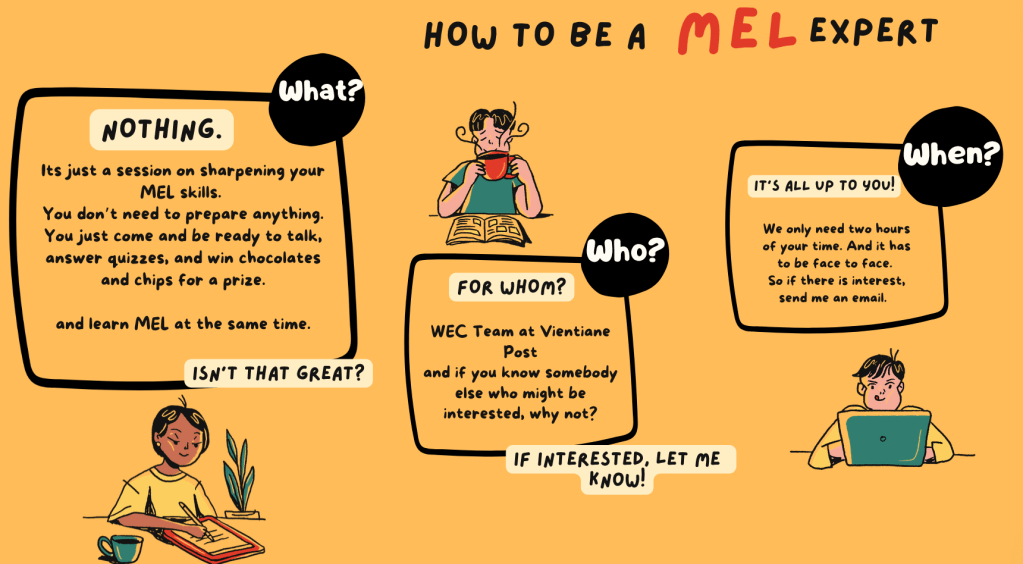
Once you know your participants well, create a training hook that matches participants’ learning objectives as it applies to their work or tasks. In most cases, people are disinterested in things that does not have anything to do with their daily activities. The objective must be very practical enough that it perks their interest (e.g. something that they can apply right away after they leave the training room) but also sets a level of ambition that gets them excited (e.g. something that they can aspire for meaningfully). Objectives should include what knowledge and skills (or even attitudes that you want your participants to develop or strengthen, and also the quality of the training journey that they will experience during the training.
These objectives need to be clarified first few minutes during the training day itself for participants’ acceptance, agreement, or readjustment so it drives their commitment to learn all througout.
3. Devise a well-thought of design that bridges participants’ baseline knowledge with desired end-of-training competencies.
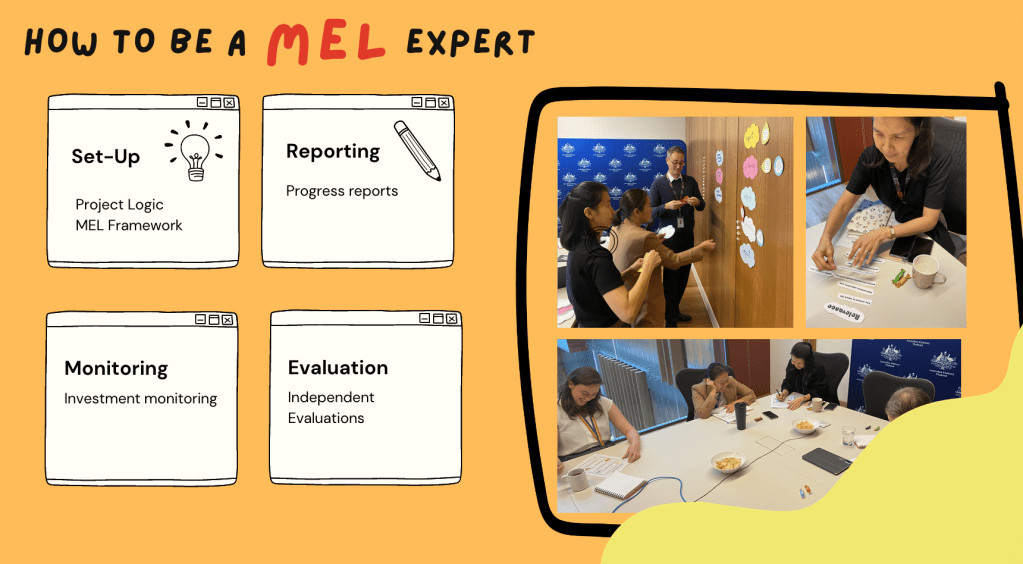
Create a learning pathway from baseline (step 1) to your training aims (step 2). The learning pathway should take into consideration what people already know and aspire to learn more, as well as their learning styles (see for example, the VARK Framework). I must admit that the designing stage is the most difficult thing to do, especially when you factor in the time that’s available to cover all learning objectives, as well as the kind of experience you want participants to have. For sure, you need to go brush up your knowledge on andragogy, so that you can best design the learning methodologies that are important to facilitate effective learning.

 Michael "Miko" Cañares